
NEXT - New equipments
Action 1: Upgrading shared micro- and nano-fabrication capabilities in alignment with the National Research Strategy (SNR) and the European Smart Specialization Strategy (S3/RIS3).
A suite of equipment (XPS, Ion Beam Etching, Flip-chip, Precision Dicing, and Precision Polishing) has been identified to implement these technologies as part of strengthening a production workflow based on a specific electro-active material: Lithium Niobate (LiNbO3). This process encompasses dimensional control to achieve the performance levels required for nano-optical and nano-acoustic components, surface characterization (including surface treatment for assembly and validation of new functional materials), and chip packaging. All of these requirements will be fulfilled by state-of-the-art new equipment.
> Multi-ion Nanofabrication and Nano-characterization Platform
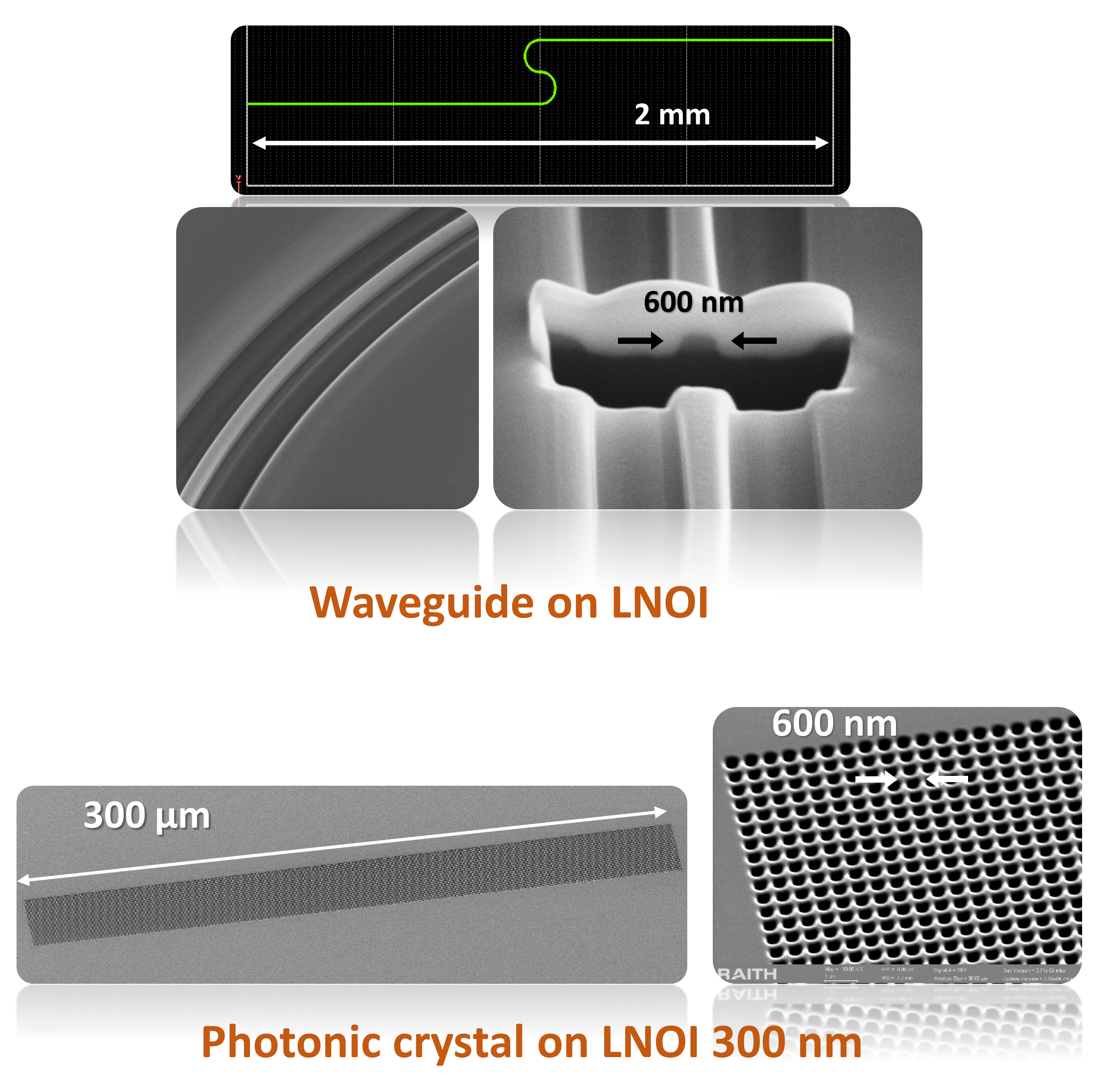
With the arrival of the new Raith Velion FIB, the multi-ion nanofabrication and nano-characterization platform will be used for ultra-high-resolution imaging, the fabrication of three-dimensional photonic and acoustic nano-objects, and the development of heterogeneous assemblies.
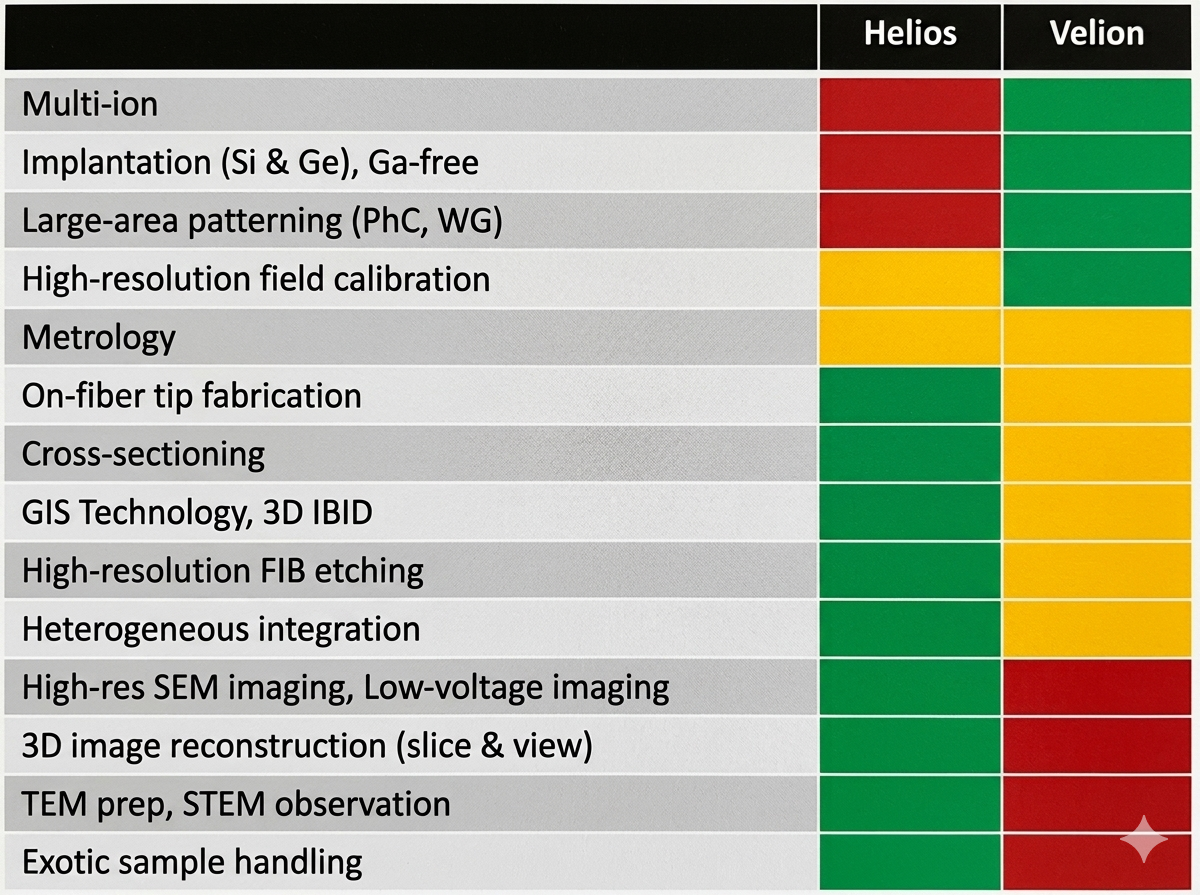
Thanks to these new capabilities, combined with the existing FIB system Helios, MIMENTO now offers an extensive range of nanofabrication processes. The platform can also accommodate increased demand due to overlapping machine capacities, as illustrated in the table below.
Emerging research themes, in connection with the Equipex+ NanoFutur project, will focus on ultra-compact integrated photonic architectures. These include nanostructures combined with deterministically positioned photonic sources, requiring advancements in automated large-area nanofabrication and controlled ion implantation. This versatile suite of equipment will be unique within the Renatech network.
Objectives:
Fabrication and nano-manipulation of multifunctional 3D nanodevices with high reproducibility.
Enhancing large-area FIB etching without contamination.
Rapid prototyping of hybrid photonic devices.
Single-ion implantation for on-chip integration of single-photon sources.
|  |
> X-ray Photoelectron Spectroscopy (XPS)
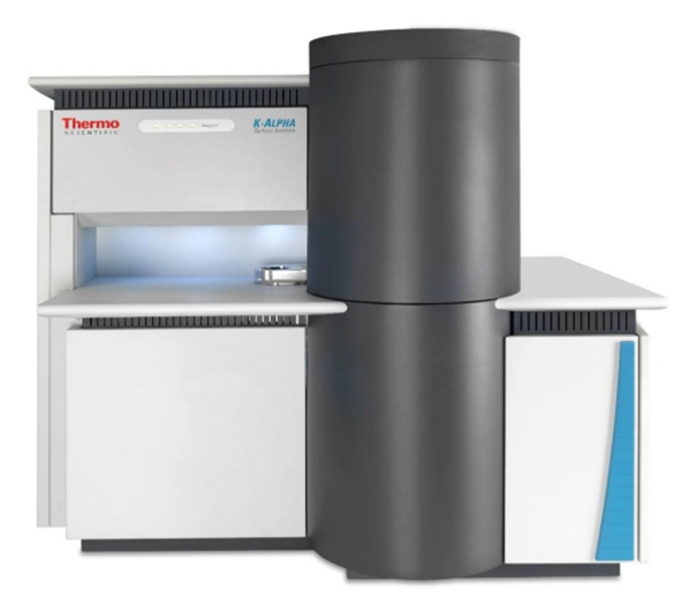
The Thermo Fisher Scientific equipment, now operational on our platform, has replaced an existing system (dating from 2004) that had reached its end-of-life. This characterization spectrometer allows us to analyze the surface chemical composition of a sample and track its evolution through depth profiling.
Thanks to its enhanced performance, it enables more in-depth studies of component surface characteristics related to the development of advanced materials, as well as applications in biomedical research and pollution control.
New Features:
- Semi-automated analysis (programmable).
- 2-inch stage (capacity for up to 20 samples).
- Improved spatial resolution.
- Multi-point analysis on a single sample (homogeneity testing).
- Depth profiling.
Research Needs:
- Development of new functional materials.
- Advanced systems and components.
- Optical, acoustic, biomedical, mecanic, tribology and fluidic applications.
> Magnetorheological Finishing (MRF)
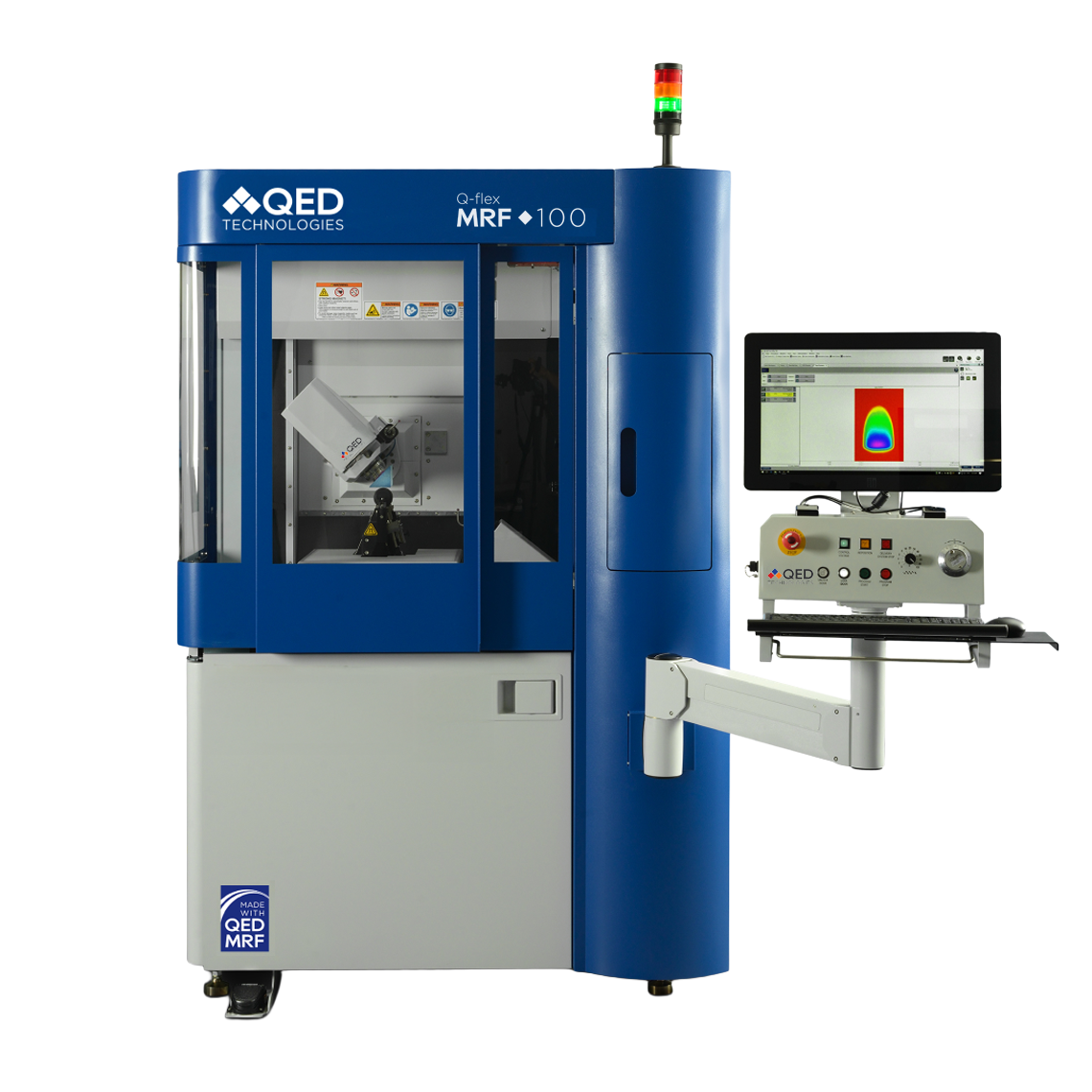
The acquisition of this new polishing system from QED Technologies will allow us to develop a unique academic capability within the Renatech national network. Magnetorheological Finishing (MRF) is a high-precision optical surface treatment technology that performs localized material removal based on a thickness map. MRF can precisely polish the surface of optical components to achieve nanometer-scale roughness.
This equipment will enable the correction of thickness inhomogeneities through localized polishing of substrates, particularly the composite substrates fabricated at the MIMENTO platform (such as assemblies of lithium niobate, glass, quartz, etc.).
The implementation of this technology aims to achieve unprecedented performance levels for acoustic wave components (RF filters, sensors) and integrated photonic components (telecommunications, sensors).
> Precision dicing saw and Flip-Chip bonding
These systems, which were already available at MIMENTO, have been upgraded because spare parts and corrective servicing by the manufacturer was no longer available.
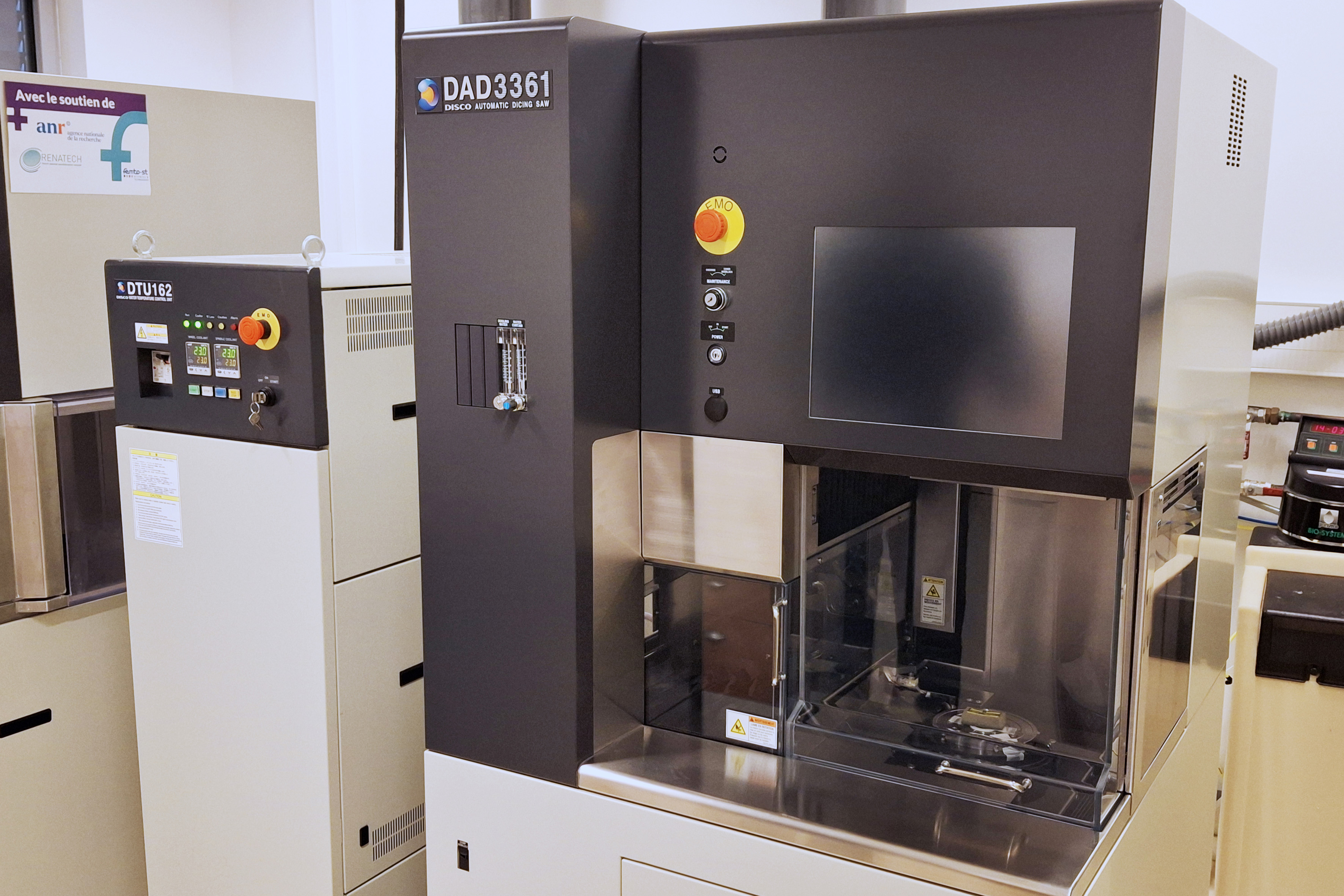
The new dicing equipment replaces a system purchased in 2002. Batch fabrication in a cleanroom environment requires precision sawing to separate individual chips (singulation). Nearly all projects conducted at MIMENTO require this technological step. The new equipment offers enhanced performance, including larger working area, faster dicing speeds and circular dicing capabilities.
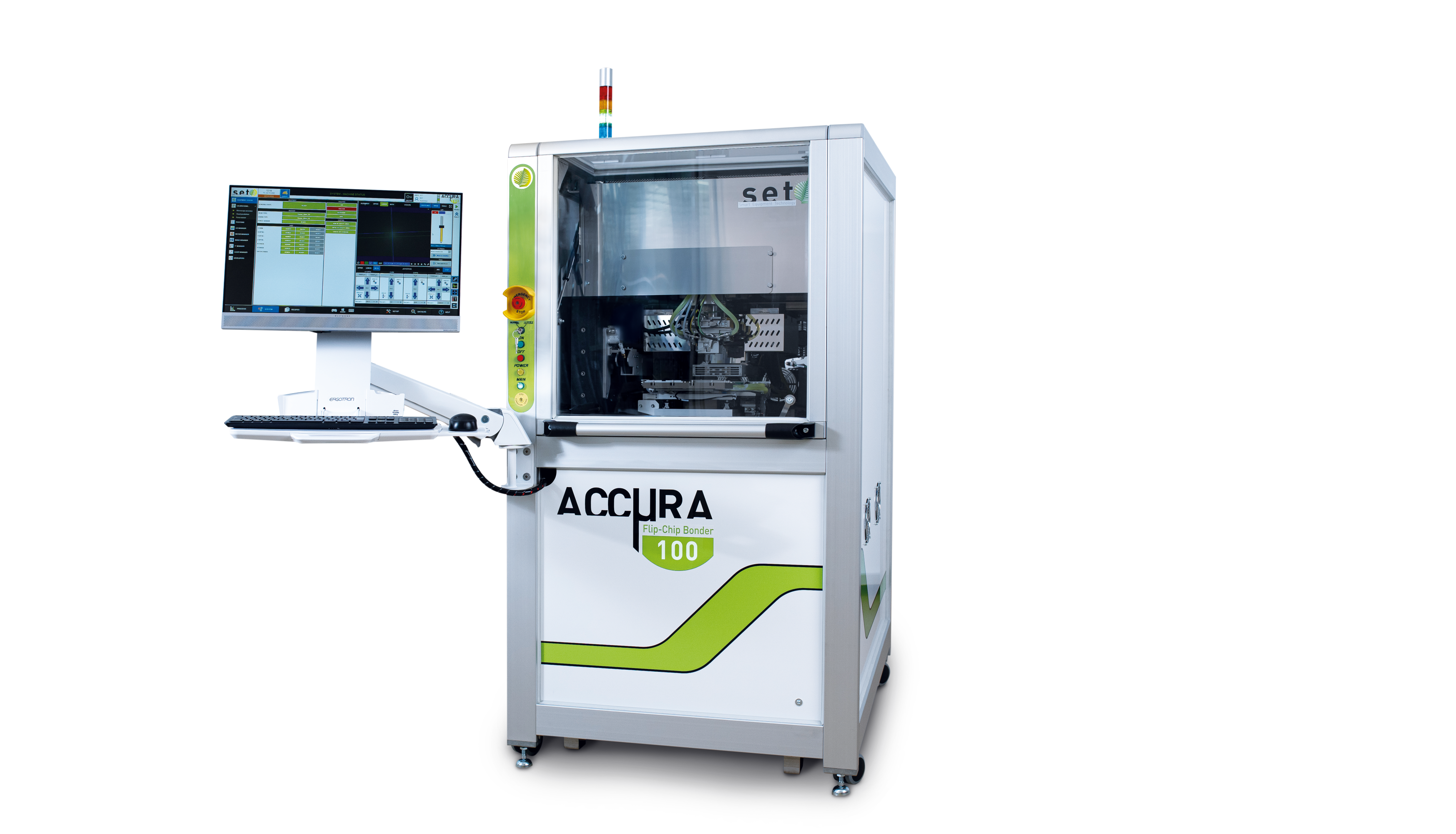
The flip-chip bonding equipment replaces a system purchased in 2006. The flip-chip process involves the electrical interconnection of one chip onto another, or onto a substrate or PCB, with high-precision alignment. This technology also enables the heterogeneous integration of various components (CMOS electronics, III-V photonics, silicon MEMS actuators, etc.).
Finally, this step is essential for chip packaging, allowing devices to be used in real-world environments outside the laboratory. The new equipment offers superior performance, such as an alignment accuracy of ±0.5 µm and improved ease of use.
In this regard, the investment in these five next-generation tools positions the NEXT project as a catalyst for technical renewal, ensuring that the MIMENTO platform and FEMTO-ST remain at the forefront of international research in micro- and nanotechnologies.